


Introduction
Making purchases from your phone has become a massive trend in the past several years, especially during the 2020 pandemic when distance and ease were paramount concerns. Making fast, seamless transactions without the need to swipe, enter a PIN, or hand over your card allows you to get in and out of the store much more quickly. As a bonus, you don’t need to carry around a wallet stuffed with credit cards, reward and punch-cards for all of your favorite places.
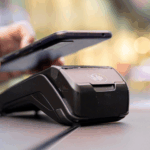
Whether you’re paying with a smartphone, smartwatch, or NFC-enabled card, the goal is simple: Convenience. That’s the appeal of contactless payments.
With convenience, unfortunately, comes a new round of concerns. Is this method truly secure, or are we opening the door to new risks?
The Convenience of Contactless
Contactless payments use NFC (near-field communication), which works only at extremely short distances. Usually, it reaches within a couple of inches.
Digital wallets take things a step further. Services like Apple Pay and Google Wallet never share your real card number. Instead, they tokenize the information. Tokenization means generating a unique, one-time code for the transaction, so that even if someone managed to intercept that data, it would be unreadable. It’s essentially a disposable card number that exists for only a moment.
Still, no technology is completely risk-free.
The Dangers of NFC
Because contactless payments are designed to work at short distances, that alone eliminates many of the imagined scenarios. For example, let’s consider a common concern that someone could secretly scan your wallet from across a room. Realistically, NFC’s limited range and strong encryption make those “tap theft” fears pretty unlikely.
Instead, the biggest vulnerabilities tend to involve the things around the transaction, and not the action of tapping itself. A lost or stolen contactless card can be used for small purchases without a PIN. A user might approve a charge on their phone or watch without noticing the full amount. In rare cases, scammers have even used fake card reader terminals. Some have attempted to trick systems into thinking the real card is present.
Let’s examine a real-life example of the latter.
Malware Targeting NFCs
Unfortunately, even secure technology can be hacked. Let’s explore SuperCard X, a relatively new Android malware-as-a-service that exploits near-field communication to steal payment-card data and enable instant cash-outs.
It’s distributed via a “reader” app on the victim’s phone, which captures NFC card data when a card is tapped to or placed near the infected phone. It relays the stolen card data back to a second “tap-device” in real time, which the attacker controls. Their tap-device can then emulate the victim’s card at a Point Of Sale terminal or ATM.
SuperCard X only uses very base-level permissions to work. Usually, it just needs access to near-field communications. That lets the malware slip right past many basic antivirus tools.
Once it’s infected a device, it turns the victim’s phone into a “relay point” that grabs the card’s tap-to-pay signal and gives it to the threat actor, thereby turning harmless contactless payments into rapid and widespread fraud.
Protecting Yourself While Enjoying Contactless Payments
Device security matters. NFC attacks often begin with a smishing or vishing message, which often claims to be from the intended victim’s bank. The message says something like, “Suspicious outgoing payment detected, please call this number to verify.” Always be extremely cautious of unsolicited messages about your finances, especially if they urge you to take immediate action.
Physical security is also important. Locking your device makes it harder to hack, because the threat actor has to break through multiple layers of defense. Meanwhile, keeping a physical card sitting loose in your wallet is easier to pickpocket and use.
You should also monitor your card transactions frequently; if you see unexpected card usage (especially contactless/spend outside normal patterns) then report it immediately.
Conclusion
So, is contactless payment a smart choice or an insecure shortcut?
For most people, it’s actually safer than traditional card swiping… as long as you use it thoughtfully. Keep devices locked, act quickly if a card goes missing, and stay alert to anything unusual during a transaction. Convenience should never come at the cost of security.
The post Is Contactless Payment Smart or Insecure? appeared first on Cybersafe.